Food crisis: Silent Tsunami
Written by Eric Walberg    PDF Print E-mail
Is there more than meets the eye in the sudden flurry of talk about a world food crisis, asks Eric Walberg

15/5/8 -- Food protests and riots swept more than 20 countries in early 2008, including Egypt. On 2 April, World Bank President Robert Zoellick told a meeting in Washington that there are 33 countries where price hikes could cause widespread social unrest. The UN World Food Programme called the crisis the silent tsunami, with wheat prices almost doubling in the past year alone,

and stocks falling to the lowest level since the perilous post-WWII days. One billion people live on less than $1 a day. Some 850 million are starving. Meanwhile, world food production increased a mere 1 per cent in 2006, and with increasing amounts of output going to biofuels, per capita consumption is declining.

The most commonly stated reasons include rising fuel costs, global warming, deterioration of soils, and increased demand in China and India. So is it all just a case of hard luck and poor planning?

There is just too much of a pattern, and too many elements all pointing in the same direction. Anyone following the news will have heard of the Council on Foreign Relations (CFR) which first met in 1921 and the group that represents the inner circle within the inner circle, the Bilderberg Club, which first met in 1954. The latter, once a highly secretive organisation bringing together select world political and business leaders, was exposed to the media spotlight in 1990s and since then has had to endure increasing criticism for its, to say the least, undemocratic role in shaping political leaders' thinking and actions in accordance with the desires of the world business elite.

The US has never been shy about flaunting world opinion. A case in point is its sole "nay" to multiple UN General Assembly and conference resolutions which declare that "health care and proper nourishment are human rights". The resolution was approved by a vote of 135-1 in 1981 under president Ronald Reagan, and at UN-sponsored food summits by similar margins in 1996 under president Bill Clinton and in 2002 under President Bush, dismissing any "right to food".

Whether Republican or Democrat, Washington instead champions free trade as the key to ending the poverty which it argues is at the root of hunger, and expresses fears that recognition of a right to food could lead to lawsuits from poor nations seeking aid and special trade provisions. And these are only resolutions by a powerless body which is in any case virtually subservient to the US. We can see at this very moment how this international humanitarian body is not above using starvation of innocent Gazans as a political tool in the interests of the status quo. Despite loud protestations to the contrary, there is little real international will opposing a future where millions die of starvation while a world elite consolidate their power.

Trying to come to grips with the world food crisis, it's hard not to subscribe to some version of a conspiracy theory -- that somehow, for some reason, this rush towards widespread world famine is actually a plan by a world clique intent on drastically reducing the world population, accelerating the collapse of national governments, allowing gigantic world corporations effectively to take their place, controlling vast areas of land, leading towards a world governed by these corporations. Especially with the US so clear in its assumption that indeed widespread famine is in the cards, for which it does not want to be held responsible. Forget about global warming (which is of course very real and harmful to food production). Here are a few more red flags.

First, the WB and IMF, set up largely by the US following WWII, are notorious for refusing to advance loans to poor countries unless they agree to Structural Adjustment Programmes that require the loan recipients to devalue their currencies, cut taxes, privatise utilities and reduce or eliminate support programmes for farmers. The results are a weakened state, impoverished local farmers and increased economic domination by international corporations. Combined with this is constant pressure on poor countries to lower tariffs, preventing them from building up their industrial potential, often destituting their farmers who cannot compete with heavily subsidised produce from rich nations.

Second, rich country subsidies, in Canada, for example, allow the federal government to pay farmers $225 for each pig killed in an ongoing mass cull of breeding swine, as part of a plan to reduce hog production. Some of the slaughtered hogs may be given to local Food Banks, but most will be destroyed or made into pet food. None will go to, say, Haiti.

Third, biofuel programmes are now channelling massive quantities of cereal and other crops to produce fuel for the world's wealthy to run their second and third family cars while close to a billion starve. Add in GMO products, which are now being forced on poor countries (and not only) by large multinationals, protected by copyright laws, effectively enslaving farmers in perpetuity, not to mention their likely dire effects on loss of crop variety.

Last but not least, the current US-sponsored wars in the Middle East, with the resultant sky- rocketing oil prices, are merely accelerating a descent into the abyss, as it and its conjunct, NATO, continue to expand beyond all responsible limits and venture into Asia, threatening more and more recalcitrant countries with loss of sovereignty, subversion and outright invasion.

But you don't have to believe in a "Made it Happen On Purpose" (MHOP) conspiracy for either 9/11 or the food crisis. As political analyst William Blum, famously cited by Osama Bin Laden on one of his video missives, told Al-Ahram Weekly, "we're speaking of men making decisions, based not on people's needs but on pseudo-scientific, amoral mechanisms like supply and demand, commodity exchanges, grain futures, selling short, selling long, and other forms of speculation, all fed and multiplied by the proverbial herd mentality -- a system governed by only two things: fear and greed; not a rational way to feed a world of human beings."

Blum subscribes to a "Let it Happen On Purpose" (LHOP) explanation concerning 9/11, that whatever conspiracy there is is loose and unorganised, that a big dose of incompetence mixed with justified anger by the oppressed is producing an explosive concoction, but that it is still possible that leaders will wake up and address the issues sensibly. This is a much more comforting worldview, but one that looks thinner and thinner as the whirlwind gathers momentum. While Blum dismisses speculation about the food crisis as conspiracy, the links between the current world upheavals starting with 9/11 are there for all to see, and less and less seems to separate MHOP from LHOP as time marches on.

In fact there has been a food crisis ever since imperialism really got underway three centuries ago. Perhaps the most extensive famines in history were presided over by Britain in India in the 18-20th centuries. It has merely metamorphosed over time, just as has the "one world" movement that imperialism itself launched. Back then, it was more obvious: burn, rape, dispossess, enslave, create monopolies for trade and production (plantations), talk about "darkest Africa". Now it is the WTO, WB, IMF, emergency loans, privatisation, GMO crops, just possibly, the gathering "food crisis".

Venezuelan President Hugo Chavez perhaps said it best: "It is a massacre of the world's poor. The problem is not the production of food. It is the economic, social and political model of the world. The capitalist model is in crisis."

Then what is really going on?

First of all, let's get rid of the idea that we are seeing "impersonal market forces" at work. Supply and demand is not a law, it's a policy. Second, let's ask the question which any competent investigator should pose when starting out on the trail of a possible crime: "Who benefits?" Indeed we can even describe the crime as genocide if the events in question are avoidable or planned. Those who benefit are obviously the ones who finance agricultural operations, those who are charging monopoly prices for the commodities in demand, the various middlemen who bring the products to market, and the owners of the land and other assets used in the production/consumption cycle.

In other words, it's the financial elite of the world who have gained control of the most basic necessity of life, guided by a long-term strategy by international finance to starve much of the world's population in order to seize their land and control their natural resources.

In Superclass: The Global Power Elite and the World They Are Making (2008), David Rothkopf, currently at the Carnegie Endowment for International Peace, former deputy undersecretary of commerce for international trade under Clinton and managing director of Kissinger and Associates, brazenly outlines the real situation. As a consummate insider, he is clearly someone who should know. A global elite now run the planet and have usurped the power of national governments while ensuring laws constrained by borders are all but obsolete. "Each one of them is one in a million. They number six thousand on a planet of six billion. They run our governments, our largest corporations, the powerhouses of international finance, the media, world religions, and, from the shadows, the world's most dangerous criminal and terrorist organisations. They are the global superclass, and they are shaping the history of our time," states the promo for the book. This elite "see national governments as residues from the past whose only useful function is to facilitate the elite's global operations. Their connections to each other have become more significant than their ties to their home nations and governments."

But why would an insider give the plot away to us plebes, you may well ask. For one thing, the exposure of the conspirators in the world media -- yes, the Internet and satellite communications work both ways -- has meant that there is a pressing need for some soothing PR, showing us that whatever conspiracy there is is benign, for our own good, necessary, if you will. That's the only explanation for such a startlingly frank insider's account as Superclass provides.

Secondly, it seems the time is ripe to move forward on this plan to drastically reduce world population, and increase control of the Earth's land and resources for a world elite in perpetuity. One- world government, super imperialism, call it what you will.

The expansion of the US military empire abroad, the Trojan Horse of the conspiracy, comes with the creation of a totalitarian system of surveillance at home and abroad, put into place as part of the "War on Terror". Human microchip implants for tracking purposes are starting to be used. The military-industrial complex has become the US's largest and most successful industry, intent on destroying both foreign and domestic "enemies". The pieces are now in place for world domination.

The 20th century -- any conspiracy really can only be clearly argued starting from the Great War-to-end-all-war -- surely was the US century, meaning it was able to impose its ideology of markets, consumerism and individualism even to the far reaches of Communist Russia and China, and hence ensure that the global elite it set in motion will subscribe in some form to its agenda -- if indeed there is one.

This situation is in fact a perverse form of Kant's recipe for world peace: countries must be willing to cede sovereignty to prevent war. His idealistic proposal floundered on the unwillingness of countries to cede meaningful autonomy to a world body, as the experience of the League of Nations and the UN have shown in spades. However, once the US succeeded in amassing overwhelming economic might in the world and in splitting up the SU, it proceeded to use NATO as just such a world body, successfully tempting the resultant statelets to join it. The plan was for Russia to be coaxed into the fold as well, though this part of the plan has, as it turns out, hit a snag.

What about foreign aid? Yes, Bush just proposed spending an additional $770 million, bringing next year's budget of food assistance to $2.6 billion. But since this is tied aid, forcing countries to import subsidised US produce, less than half the amount actually reaches the starving peasants, and combined with WB/IMF structural adjustment policies such aid really does more to compound the problem than provide any real long-term change for the better.

For sceptics about the possibility of some form of LHOP/MHOP, just consider the following: if indeed 6,000 elite business leaders control the world's fate, surely such an immensely wealthy and powerful coterie could solve the food crisis in a flash. The massive expenditures on arms and the wanton destruction they cause every second, could, if stopped, provide the will and resources to restructure the world to end starvation, let alone poverty, leaving lots left over for the elite to wallow in. There is no organised force of any consequence opposing this world elite. What's stopping it?

http://weekly.ahram.org.eg/2008/897/in2.htm


From Peace & Socialism

  • Fighting the enemy at times means fighting your erstwhile comrades-in-arms, writes Eric Walberg

    The phenomenal success the Boycott Divestment and Sanctions (BDS) movement has had since it began in 2005 has attracted attention from all corners of the political spectrum -- for better or for worse. Israel is scared. Israeli thinktanks have described BDS as a greater threat to Israel than armed Palestinian resistance. At the same time, at the forefront of the movement against what is now widely called Israeli apartheid are Jews -- Israeli and diaspora. This is not surprising, as Jews have traditionally been active in “political mobilisation and opinion formation”, according to Benjamin Ginsberg.

  • Interview by Jonathan Reynolds, an anthropologist who writes for spikemagazine.com and author of two books on the Maya and Guatemala

    Q: For a work of geopolitical history, I found the book a real ‘page-turner’.

    A: Thanks. It’s gratifying that this came across. So much of the critique of imperialism is depressing and boring, and puts the reader off. The history is fascinating, if horrifying.

    Q: I was impressed by the great sweep of the argument, and how the details of the history of imperialism as you write about it are integrated so well into it.

    A: Again, thanks. I couldn’t have done it without the internet. I really should have put Wikipedia in the acknowledgments, although this must be treated circumspectly – it allows you to track down hundreds of details in seconds that are essential to making a credible argument. Again, much of the literature is either too detail-heavy or too generalized. In writing both my articles over the past decade, and this (and another book) over the past four years, I developed a style where I try to include as many relevant details as possible without sinking under their weight.

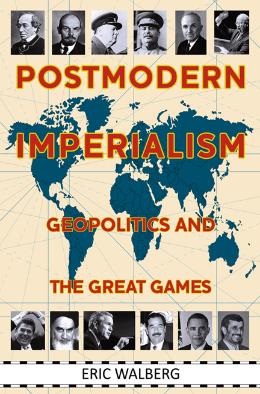
  • Two weeks ago I published a review of Eric Walberg’s invaluable new book Postmodern Imperialism: Geopolitics and the Great Games. I was left with a few questions which Eric was kind enough to address.

    Gilad Atzmon:  Hello Eric; thanks for finding the time to talk. I would like to begin if I may, with a few short questions: firstly, what is self-hatred?

    Eric Walberg: Buddhism is based on the annihilation of the self. Islam – on the total submission of self. It’s at the heart of Christian beliefs too. (I don’t know about Judaism.)  Self-hatred has respectable roots.

  • As oil prices soar and countries think twice about expanding nuclear power, we should be careful about where to point the finger, says Eric Walberg

    Japan’s trauma following the partial meltdown of nuclear reactors in Fukushima has once again brought to the world’s attention the dangers of nuclear power. From the start, it was clear that a broad advocacy of nuclear energy is bad ecology. Splitting the atom (or worse, fusing atoms) unleashes intense heat and radiation and produces poisonous waste that lasts for up to 10,000 years or more.

  • 31/1/11

    Waiting for my flight to Munich in Toronto, a voluble American my age struck up a conversation. Ed is an attorney from Atlanta with 7 kids -- 3 from his first marriage, 2 from his second wife's first marriage, and 2 from their marriage. "A typical American family these days," he said, meaning the mixed marriage rather than the number of kids. He launched unbidden into a scathing critique of the US, saying it was basically a basket case, becoming a totalitarian monster, and that he was looking for a place to move to with his family.

    When I told him I was going to Cairo, he asked if Egypt was a good prospect. Considering it was in the midst of a revolution, I suggested he consider Cyprus as a better option.

  • 2010 was a tough one overall. Public discontent with governments and economic policy brought people out on the streets to protest. US wars, occupation and threat of war in the Middle East and Asia were never far from the headlines. Elections around the world led  in most cases to further tensions. There were few outright winners and many more losers, with most developments a mixed bag.

  • Much is being made of North Korea’s shelling of one of 30 disputed islands, Yeonpyeong, which houses a South Korean military base, well inside what should be a demilitarised zone between the two Koreas resulting in the deaths of two South Korean marines and two civilians. The borders were unilaterally drawn by the UN at the end of the 1950-53 war and the countries are still officially in a state of war. Rumours are that the incident is connected to the possible transition of power from North Korean leader Kim Jong Il to his son Kim Jong Un, or to North Korea’s recent announcement that it is proceeding with its nuclear programme.


    The skirmish began Tuesday when North Korea warned the South to halt military drills at the base, after which Seoul began firing artillery directly into disputed waters within sight of the North Korean shore. The North retaliated by shelling the Yeonpyeong military installations. Seoul responded by unleashing its own barrage of howitzers and scrambling fighter jets over the North, killing far more North Koreans though the actual number is not yet know.

    The words of condemnation -- of the North -- from UN Secretary-General Ban Ki-moon and US President Barack Obama for the “provocation” flowed, as expected. Obama used the occasion to reaffirmed plans to stage joint military exercises later this week in the Yellow Sea, the latest in its own provocations of both North Korea and China this year, following the sinking of a South Korean warship in an earlier joint US-South Korean military “exercise”. Accusations that North Korea torpedoed the Cheonan, killing 46 sailors, were undermined by evidence pointing to the US itself. Pyongyang denied responsibility.

    400 of the 1,700 residents of Yeonpyeong were evacuated. Instead of demilitarising the disputed islands and agreeing to mediation, the South Korean government announced it would strengthen its military forces there and halt aid to the North, while the North warned of more military strikes if the South encroaches on the maritime border by "even 0.001 millimetre."

    That the provocation is from the South Korea side, with its pro-US President Lee Myung-bak, who has made his anti-communist sentiments clear in the past, is confirmed by the fact that the incident failed to scare off investors, with South Korea's stock market experiencing only a momentary ripple.

  • With the rise of Hitler, the Peace Prize committee finally mustered up the courage to take on Nazism, and awarded the 1935 prize to Carl von Ossietzky, a German journalist and pacifist who had spent several years in Papenburg-Esterwegen, a Nazi concentration camp, convicted of high treason and espionage in 1931 after publishing details of Germany's violation of the Treaty of Versailles by rebuilding an air force and training pilots in the Soviet Union. (Ironically, the verdict was upheld by the Federal Court of Justice in 1992.) At the time it was a highly controversial decision, with two jury members resigning, fearing a political fallout with the Nazis.

  • Everyone knows that Alfred Nobel created his eponymous Peace Prize partly to assuage his guilt for unleashing dynamite on an already saber-rattling world. Fewer know that he wrote at the time that if the world still needed the prize 30 years later, we would "inevitably lapse into barbarism".

  • October 2003 -- The America I once knew seems like a distant memory, says one journalist after another these days. But how about this: "Times such as ours have always bred defeatism and despair." Re-reading Einstein's writings on peace, it is clear that America has been through an equally insane fit in the past - such as the madness following World War II.
  • Garment worker, peace activist, mother. Born 1906, sister of composer Leonid Tsukert, wife of poet and peace activist Harold Bates.

    Like a rose bush, Sonja bloomed many times, sending her roots into whatever soil there was, finding nourishment where others found only dirt, and producing beauty and joy where others found only darkness and misery. She was the 4th of 9 children born to a stationmaster on the Imperial Russian railway in eastern Poland.

  • “For centuries, Europeans dominated the African continent. The white man arrogated to himself the right to rule and to be obeyed by the non-white; his mission, he claimed, was to "civilize" Africa. Under this cloak, the Europeans robbed the continent of vast riches and inflicted unimaginable suffering on the African people.”

    --- I Speak of Freedom: A Statement of African Ideology (1961)


    (Spring 2008) -- The incessant stream of bad news — make that “flood” — from “the dark continent” gives the impression that Africa somehow missed out on the wonders of capitalist development which the West luckily reaped through some quirk of fate. No longer is it acceptable to attribute this discrepancy to skin colour, though that underlying prejudice still survives, seemingly corroborated by World Bank — even holier-than-thou United Nations — statistics.

    So the words and works of Kwame Nkrumah, which inspired a generation, are well worth a second glance. In fact, the greatest African of the millennium, according to the 2000 BBC World Service listeners’ poll, is not Nelson Mandela or even Patrice Lumumba, but Kwame Nkrumah, the man who inspired the movement for African independence, but who has dropped out of Western discourse, for very good reasons.

  • The gloves are off in the battle to shape our "new world order", observes Eric Walberg

    19/2/9 -- The American Recovery and Reinvestment Bill passed this week will define Barack Obama's presidency. But it is really just the younger sibling to the Troubled Assets Relief Programme. To separate the now trillions being handed out to the banksters from the $800 billion being handed out to the lottery winners is to be ingenuous. The elder sister's patrons are already blackmailing mama Obama, wailing for more trillions or they will plunge the economy into even greater financial crisis. "You ain't seen nothing yet," they hissed to Treasury Secretary Geithner, who, according to economist Michael Hudson, quickly "pledged government financing for as much as $2 trillion... to spur new lending and address banks' toxic assets, seeking to end the credit crunch hobbling the economy."

  • In the second of a two-part series, Eric Walberg looks at the repercussions of the Soviet occupation of Afghanistan

    29/5/8 -- While the current occupations of Afghanistan and Iraq look to be part of an ambitious plan of American domination of the Muslim world, both are proving to be a much greater problem than their shadowy planners supposed. And whatever conspiracy jigsaw puzzle Afghanistan forms a key piece in, it is certainly not one made in Russia, despite current attempts by the United States to paint Russia, formerly enemy number one, as enemy number two, after the current enemy du jour -- Islam.

  • The US is not only repeating all the Soviets' mistakes in Afghanistan, it is showing remarkable creativity in the horrors department, says Eric Walberg in the first of a two-part series
     
    22/5/8 -- Twenty years ago this week (22 May 2008) the Soviet Union began its withdrawal from Afghanistan, eight and a half years after it was invited by the desperate People's Democratic Party of Afghanistan (PDPA), which had degenerated into intra-party squabbling and was beset by Islamic rebels massively financed by the United States. The straw that broke the Soviets' back was when the US began providing Stinger missiles to Osama bin Laden and his friends.
  • Is there more than meets the eye in the sudden flurry of talk about a world food crisis, asks Eric Walberg

    15/5/8 -- Food protests and riots swept more than 20 countries in early 2008, including Egypt. On 2 April, World Bank President Robert Zoellick told a meeting in Washington that there are 33 countries where price hikes could cause widespread social unrest. The UN World Food Programme called the crisis the silent tsunami, with wheat prices almost doubling in the past year alone,

  • As demonstrators march on the White House with a million signatures on a petition to impeach Bush and Cheney, doubts persist about the event that made them "wartime leaders", says Eric Walberg

    6/9/7 -- Theories about what really happened on 11 September, 2001 continue to inspire books and documentaries and convince otherwise sane, respectable public figures, not to mention the teeming masses. Journalist Robert Fisk recently joined the fray, intrigued by the scientific improbably of the buildings collapsing in such a seemingly controlled way and charges by engineering professors who call the final report "fraudulent or deceptive". As a Middle East expert, he also finds the letter allegedly written by Mohamed Atta, the Egyptian hijacker- murderer "weird", surely a forgery.

  • While UN peacekeeping has done little to calm the world's troubled waters, the UN's other mandate -- development -- has had some success despite its many problems, argues Eric Walberg

    30/8/7 -- The debate over how to achieve peace revolves around two poles: world peacekeeping and disarmament vs economic and social development. The latter argument goes: busy literate hands and full stomachs obviate the need for war, just as the improvement of women's status leads to reduced family size.

  • With its largest peacekeeping mission planned in Sudan, Eric Walberg considers the UN's track record in the first of two articles
     

    16/8/7 -- Founded amidst the rubble of World War II -- well, actually in untouched San Francisco, with delegates spirited in by United States military planes, and nursed and spied on by a US determined to make the most of its new unrivalled world hegemony -- the United Nation started out with much more potential than its stillborn predecessor, the League of Nations, precisely because the US was committed. Even the Republicans were onboard, and all the major powers were present and willing. However, this US blessing was a two-edged sword and the UN's history is one of ups and downs with few political highpoints.