The UN: Achieving peace through development?
Written by Eric Walberg    PDF Print E-mail
While UN peacekeeping has done little to calm the world's troubled waters, the UN's other mandate -- development -- has had some success despite its many problems, argues Eric Walberg

30/8/7 -- The debate over how to achieve peace revolves around two poles: world peacekeeping and disarmament vs economic and social development. The latter argument goes: busy literate hands and full stomachs obviate the need for war, just as the improvement of women's status leads to reduced family size.

In part one (16-22 August 2007 "Peacemaker or puppet?" Al-Ahram Weekly) the UN's political role as peacekeeper was found to be woefully lacking, especially now that the US hyperpower calls all the shots. Peacekeeping must be followed up by disarmament for it to be the road to peace, but post-WWII history has shown how ineffective this policy is.

How about the other route? The myriad UN agencies such as UNESCO, UNDP, UNICEF, and their financial cousins the WB and IMF, have become household names and initially had a positive impact in alleviating distress, promoting development, and presumably peace, or at least not contributing to war. However, these international institutions fashioned by the allies during WWII have been increasingly co-opted into the US imperial project and the result today is far from pretty.

Many countries protested when the new UN Secretary- General Ban Ki-Moon appointed US diplomat B Lynn Pascoe under-secretary-general for political affairs, the UN's chief diplomatic position. Since the days of President Reagan, the UN has come under concerted attack by the US, demanding changes in UN structure and policy, effectively crippling many programmes. Even under the supposedly enlightened Clinton regime, pressure to corporatise the UN and bring it closer to US priorities continued and bore fruit in secretary- general Kofi Annan's sweeping reform proposals responding to US criticisms.

The best of the reforms involved the creation of common country UN plans, known as United Nations Development Assistance Frameworks, or UNDAFs, to coordinate the myriad assistance programmes for each country. Down with bureaucracy -- no problem there. In Egypt, the second UNDAF began work in January 2007 for the period ending 2011, with its own set of Millennium Development Goals, benchmarks to raise education and health standards. Egypt, for one, takes its MDGs seriously and has been given a B+ in a recent assessment.

However, the MDGs and economic development goals are now pursued more and more by private means under the UN logo. Annan caved in to the privatisation mania of the 1990s, creating partnerships with multinationals, according to which the UN would act as a "monitor" of corporate practices and "moderate" between Third World governments and transnationals, providing the latter with the prestigious UN logo and reputation, local contacts and field expertise, and charging each company 20 pieces of silver ($50,000) for the privilege. The corporations would, in turn, transfer technology and investments and alleviate poverty by employing local labour and building up local businesses. A joint venture between the UNDP and some 20 transnational companies, euphemistically called "Global Sustainable Development Facility", is still in the planning stages.

So, for example, to great fanfare, ExxonMobil Egypt recently announced it donated 60 computers to youth organisations in Egypt within the company's partnership with UNICEF and the agency's Adolescent Development Programme. "Through providing necessary facilities to improve education and increase opportunities, we can make a difference in the future of these young people in areas of employment, health and others," said Tom Walter, chairman and managing director of ExxonMobil Egypt. "The large number of youth in Egypt, and the implications it has for this country's growth and development, underscore the need for the active participation of corporate citizens such as ExxonMobil Egypt," said Erma Manoncourt, UNICEF Egypt representative. ExxonMobil PR boasted it is involved in "community service" in 120 countries.

Yes, one of the world's worst polluters (remember Valdez?), which earns billions extracting oil from Third World countries, destroying local cultures and environments, can, for the cost of a few computers, now tell fairytales about its humanitarian efforts with the heartfelt gratitude of the obliging UNESCO country rep.

UN development agencies played a major role in the ex-socialist bloc, where they quickly moved in to assist the new pro-Western governments privatise state-owned industries. They play the same role throughout the Third World. The results have been less than spectacular and have produced a backlash, for privatisation is essentially a transfer of wealth from the broader society to the rich, radically increasing income disparity and unemployment, hardly part of the original UN mandate.

As for the international financial institutions, right from the start, the World Bank head has been directly appointed by the US president (the IMF head by the Europeans) which culminated recently in the scandalous appointment of Paul Wolfowitz. Both function less to promote development than to ensure US dollar hegemony, and have planted monetary daggers in the heart of many a socially-minded leader, directly contributing not to peace but to political violence and repression. Recent South American experiences -- especially Argentina -- have revealed this starkly, and the past 10 years have witnessed more and more countries paying off all IMF debts as political health insurance. And economic as well, as these countries have actually thrived as a result of kicking out their IMF overlords and tearing up their "adjustment packages". So much so, that the IMF is in serious financial difficulties -- no one to squeeze dry, no work for its army of accountants.

Ban, no doubt prompted by his political under-secretary, has been focussing on facilitating the US political agenda these days, pushing development into the background. He has raised hackles with his proposed expansion of the peacekeeping department so that it could better handle the largest increase in "peacekeeping" missions in history -- the latest being the US- promoted intervention in Sudan, while downgrading the disarmament department, which is popular among poor countries concerned with the nuclear arsenals of powerful nations and not particularly happy with current rash of invasions and the subsequent need for "peacekeeping".

Ban also caused considerable concern in the UN bureaucracy with his recent announcement that the UN development role in Iraq will be expanded, despite the 2003 bombing of UN headquarters in Iraq that killed 21 staff and the UN envoy Vieira de Mello and caused it to pull out in ignominy. Ban dismissed the unanimous UN staff association opposition and said the present 65 personnel would be increased to 95. He called on member countries to provide $130 million to build the UN a "fortified compound" in Baghdad. The US generously offered to help out.

Alejandro Wolff, the acting US ambassador to the UN until Khalilzad was appointed, said in February that fears that Ban is doing Washington's bidding are baseless and hampering sincere efforts to carry out "concrete and practical and apolitical reforms. The conspiracy theorists out there are convinced this is an American agenda and that this is a secretary- general who is essentially responding to American demands." Translation: Ban is doing Washington's bidding and shut up and accept the facts of life.

The UN and its financial cousins had some coherence when they were forged by partners, even if the partners hated each other's guts, and their first four decades made a real contribution to development and alleviation of poverty . Now that they have become the playthings of our unipolar hegemone, they are being left behind as the world desperately tries to deal with the mess the US is making everywhere. Will we still be talking about a UN in 10 years time? Will it collapse along with its main founder? Or fade away into irrelevance, as it seems to be doing now?

One possible reform is to expand the Security Council to include some combination of Germany, India, Brazil, Japan, Egypt, Nigeria and South Africa. Even if the existing five members keep their veto, an expanded council would make it more difficult to allow another US-led imperial venture like the invasion of Iraq, which the council effectively condoned.

Another possible direction for reinvigorating it politically is the creation of a UN parliamentary assembly (UNPA), composed initially of elected parliamentarians from around the world. This has been the project of the World Federalists since the UN was formed, and has gained some momentum in the past 15 years. "A parliamentary assembly would make the UN more transparent, more efficient and more democratic", said former UN secretary-general Boutros Boutros-Ghali, patron of a WF conference planned for October. Initially, the UNPA could be composed of a small number of representatives from each national parliament and would eventually be composed of directly elected members, evolving into a world parliament.

As for development alternatives, there are now 40,000 internationally recognised NGOs, some of them actually legitimate and effective, dealing with environment, development, and disarmament, with the UN acting as an umbrella. The very phrase "non-governmental organisation" first came into popular use with the establishment of the UN in 1945. A prominent example is the World Social Forum (WSF) which is a rival convention to the elitist World Economic Forum. The seventh WSF in Nairobi, Kenya in February was attended by representatives from more than 1,000 NGOs.

So with warning signs of trouble at the IMF, and mounting discontent with privatisation as a panacea and the UN as US handmaiden, the future for the UN at best promises to be one of turmoil. If the world magically turns socialist, the WSF and the legitimate NGOs could become the cradle of a new international order, but then so could the UN.

No, we must wait for the scam that is the New World Order to come crashing down along with its dollar scaffolding, or for Russia and China to work with other dissatisfied countries to create credible alternative financial institutions and an international currency arrangement free of the US. There is little likelihood that Ban's UN will play much of a role in this, either politically or economically, but creation of a world parliament could be a move towards real forum for the world's peoples without interference from their governments.

http://weekly.ahram.org.eg/2007/860/in2.htm


From Peace & Socialism

  • Fighting the enemy at times means fighting your erstwhile comrades-in-arms, writes Eric Walberg

    The phenomenal success the Boycott Divestment and Sanctions (BDS) movement has had since it began in 2005 has attracted attention from all corners of the political spectrum -- for better or for worse. Israel is scared. Israeli thinktanks have described BDS as a greater threat to Israel than armed Palestinian resistance. At the same time, at the forefront of the movement against what is now widely called Israeli apartheid are Jews -- Israeli and diaspora. This is not surprising, as Jews have traditionally been active in “political mobilisation and opinion formation”, according to Benjamin Ginsberg.

  • Interview by Jonathan Reynolds, an anthropologist who writes for spikemagazine.com and author of two books on the Maya and Guatemala

    Q: For a work of geopolitical history, I found the book a real ‘page-turner’.

    A: Thanks. It’s gratifying that this came across. So much of the critique of imperialism is depressing and boring, and puts the reader off. The history is fascinating, if horrifying.

    Q: I was impressed by the great sweep of the argument, and how the details of the history of imperialism as you write about it are integrated so well into it.

    A: Again, thanks. I couldn’t have done it without the internet. I really should have put Wikipedia in the acknowledgments, although this must be treated circumspectly – it allows you to track down hundreds of details in seconds that are essential to making a credible argument. Again, much of the literature is either too detail-heavy or too generalized. In writing both my articles over the past decade, and this (and another book) over the past four years, I developed a style where I try to include as many relevant details as possible without sinking under their weight.

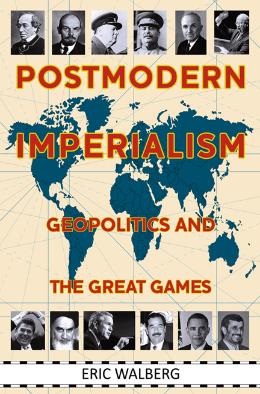
  • Two weeks ago I published a review of Eric Walberg’s invaluable new book Postmodern Imperialism: Geopolitics and the Great Games. I was left with a few questions which Eric was kind enough to address.

    Gilad Atzmon:  Hello Eric; thanks for finding the time to talk. I would like to begin if I may, with a few short questions: firstly, what is self-hatred?

    Eric Walberg: Buddhism is based on the annihilation of the self. Islam – on the total submission of self. It’s at the heart of Christian beliefs too. (I don’t know about Judaism.)  Self-hatred has respectable roots.

  • As oil prices soar and countries think twice about expanding nuclear power, we should be careful about where to point the finger, says Eric Walberg

    Japan’s trauma following the partial meltdown of nuclear reactors in Fukushima has once again brought to the world’s attention the dangers of nuclear power. From the start, it was clear that a broad advocacy of nuclear energy is bad ecology. Splitting the atom (or worse, fusing atoms) unleashes intense heat and radiation and produces poisonous waste that lasts for up to 10,000 years or more.

  • 31/1/11

    Waiting for my flight to Munich in Toronto, a voluble American my age struck up a conversation. Ed is an attorney from Atlanta with 7 kids -- 3 from his first marriage, 2 from his second wife's first marriage, and 2 from their marriage. "A typical American family these days," he said, meaning the mixed marriage rather than the number of kids. He launched unbidden into a scathing critique of the US, saying it was basically a basket case, becoming a totalitarian monster, and that he was looking for a place to move to with his family.

    When I told him I was going to Cairo, he asked if Egypt was a good prospect. Considering it was in the midst of a revolution, I suggested he consider Cyprus as a better option.

  • 2010 was a tough one overall. Public discontent with governments and economic policy brought people out on the streets to protest. US wars, occupation and threat of war in the Middle East and Asia were never far from the headlines. Elections around the world led  in most cases to further tensions. There were few outright winners and many more losers, with most developments a mixed bag.

  • Much is being made of North Korea’s shelling of one of 30 disputed islands, Yeonpyeong, which houses a South Korean military base, well inside what should be a demilitarised zone between the two Koreas resulting in the deaths of two South Korean marines and two civilians. The borders were unilaterally drawn by the UN at the end of the 1950-53 war and the countries are still officially in a state of war. Rumours are that the incident is connected to the possible transition of power from North Korean leader Kim Jong Il to his son Kim Jong Un, or to North Korea’s recent announcement that it is proceeding with its nuclear programme.


    The skirmish began Tuesday when North Korea warned the South to halt military drills at the base, after which Seoul began firing artillery directly into disputed waters within sight of the North Korean shore. The North retaliated by shelling the Yeonpyeong military installations. Seoul responded by unleashing its own barrage of howitzers and scrambling fighter jets over the North, killing far more North Koreans though the actual number is not yet know.

    The words of condemnation -- of the North -- from UN Secretary-General Ban Ki-moon and US President Barack Obama for the “provocation” flowed, as expected. Obama used the occasion to reaffirmed plans to stage joint military exercises later this week in the Yellow Sea, the latest in its own provocations of both North Korea and China this year, following the sinking of a South Korean warship in an earlier joint US-South Korean military “exercise”. Accusations that North Korea torpedoed the Cheonan, killing 46 sailors, were undermined by evidence pointing to the US itself. Pyongyang denied responsibility.

    400 of the 1,700 residents of Yeonpyeong were evacuated. Instead of demilitarising the disputed islands and agreeing to mediation, the South Korean government announced it would strengthen its military forces there and halt aid to the North, while the North warned of more military strikes if the South encroaches on the maritime border by "even 0.001 millimetre."

    That the provocation is from the South Korea side, with its pro-US President Lee Myung-bak, who has made his anti-communist sentiments clear in the past, is confirmed by the fact that the incident failed to scare off investors, with South Korea's stock market experiencing only a momentary ripple.

  • With the rise of Hitler, the Peace Prize committee finally mustered up the courage to take on Nazism, and awarded the 1935 prize to Carl von Ossietzky, a German journalist and pacifist who had spent several years in Papenburg-Esterwegen, a Nazi concentration camp, convicted of high treason and espionage in 1931 after publishing details of Germany's violation of the Treaty of Versailles by rebuilding an air force and training pilots in the Soviet Union. (Ironically, the verdict was upheld by the Federal Court of Justice in 1992.) At the time it was a highly controversial decision, with two jury members resigning, fearing a political fallout with the Nazis.

  • Everyone knows that Alfred Nobel created his eponymous Peace Prize partly to assuage his guilt for unleashing dynamite on an already saber-rattling world. Fewer know that he wrote at the time that if the world still needed the prize 30 years later, we would "inevitably lapse into barbarism".

  • October 2003 -- The America I once knew seems like a distant memory, says one journalist after another these days. But how about this: "Times such as ours have always bred defeatism and despair." Re-reading Einstein's writings on peace, it is clear that America has been through an equally insane fit in the past - such as the madness following World War II.
  • Garment worker, peace activist, mother. Born 1906, sister of composer Leonid Tsukert, wife of poet and peace activist Harold Bates.

    Like a rose bush, Sonja bloomed many times, sending her roots into whatever soil there was, finding nourishment where others found only dirt, and producing beauty and joy where others found only darkness and misery. She was the 4th of 9 children born to a stationmaster on the Imperial Russian railway in eastern Poland.

  • “For centuries, Europeans dominated the African continent. The white man arrogated to himself the right to rule and to be obeyed by the non-white; his mission, he claimed, was to "civilize" Africa. Under this cloak, the Europeans robbed the continent of vast riches and inflicted unimaginable suffering on the African people.”

    --- I Speak of Freedom: A Statement of African Ideology (1961)


    (Spring 2008) -- The incessant stream of bad news — make that “flood” — from “the dark continent” gives the impression that Africa somehow missed out on the wonders of capitalist development which the West luckily reaped through some quirk of fate. No longer is it acceptable to attribute this discrepancy to skin colour, though that underlying prejudice still survives, seemingly corroborated by World Bank — even holier-than-thou United Nations — statistics.

    So the words and works of Kwame Nkrumah, which inspired a generation, are well worth a second glance. In fact, the greatest African of the millennium, according to the 2000 BBC World Service listeners’ poll, is not Nelson Mandela or even Patrice Lumumba, but Kwame Nkrumah, the man who inspired the movement for African independence, but who has dropped out of Western discourse, for very good reasons.

  • The gloves are off in the battle to shape our "new world order", observes Eric Walberg

    19/2/9 -- The American Recovery and Reinvestment Bill passed this week will define Barack Obama's presidency. But it is really just the younger sibling to the Troubled Assets Relief Programme. To separate the now trillions being handed out to the banksters from the $800 billion being handed out to the lottery winners is to be ingenuous. The elder sister's patrons are already blackmailing mama Obama, wailing for more trillions or they will plunge the economy into even greater financial crisis. "You ain't seen nothing yet," they hissed to Treasury Secretary Geithner, who, according to economist Michael Hudson, quickly "pledged government financing for as much as $2 trillion... to spur new lending and address banks' toxic assets, seeking to end the credit crunch hobbling the economy."

  • In the second of a two-part series, Eric Walberg looks at the repercussions of the Soviet occupation of Afghanistan

    29/5/8 -- While the current occupations of Afghanistan and Iraq look to be part of an ambitious plan of American domination of the Muslim world, both are proving to be a much greater problem than their shadowy planners supposed. And whatever conspiracy jigsaw puzzle Afghanistan forms a key piece in, it is certainly not one made in Russia, despite current attempts by the United States to paint Russia, formerly enemy number one, as enemy number two, after the current enemy du jour -- Islam.

  • The US is not only repeating all the Soviets' mistakes in Afghanistan, it is showing remarkable creativity in the horrors department, says Eric Walberg in the first of a two-part series
     
    22/5/8 -- Twenty years ago this week (22 May 2008) the Soviet Union began its withdrawal from Afghanistan, eight and a half years after it was invited by the desperate People's Democratic Party of Afghanistan (PDPA), which had degenerated into intra-party squabbling and was beset by Islamic rebels massively financed by the United States. The straw that broke the Soviets' back was when the US began providing Stinger missiles to Osama bin Laden and his friends.
  • Is there more than meets the eye in the sudden flurry of talk about a world food crisis, asks Eric Walberg

    15/5/8 -- Food protests and riots swept more than 20 countries in early 2008, including Egypt. On 2 April, World Bank President Robert Zoellick told a meeting in Washington that there are 33 countries where price hikes could cause widespread social unrest. The UN World Food Programme called the crisis the silent tsunami, with wheat prices almost doubling in the past year alone,

  • As demonstrators march on the White House with a million signatures on a petition to impeach Bush and Cheney, doubts persist about the event that made them "wartime leaders", says Eric Walberg

    6/9/7 -- Theories about what really happened on 11 September, 2001 continue to inspire books and documentaries and convince otherwise sane, respectable public figures, not to mention the teeming masses. Journalist Robert Fisk recently joined the fray, intrigued by the scientific improbably of the buildings collapsing in such a seemingly controlled way and charges by engineering professors who call the final report "fraudulent or deceptive". As a Middle East expert, he also finds the letter allegedly written by Mohamed Atta, the Egyptian hijacker- murderer "weird", surely a forgery.

  • While UN peacekeeping has done little to calm the world's troubled waters, the UN's other mandate -- development -- has had some success despite its many problems, argues Eric Walberg

    30/8/7 -- The debate over how to achieve peace revolves around two poles: world peacekeeping and disarmament vs economic and social development. The latter argument goes: busy literate hands and full stomachs obviate the need for war, just as the improvement of women's status leads to reduced family size.

  • With its largest peacekeeping mission planned in Sudan, Eric Walberg considers the UN's track record in the first of two articles
     

    16/8/7 -- Founded amidst the rubble of World War II -- well, actually in untouched San Francisco, with delegates spirited in by United States military planes, and nursed and spied on by a US determined to make the most of its new unrivalled world hegemony -- the United Nation started out with much more potential than its stillborn predecessor, the League of Nations, precisely because the US was committed. Even the Republicans were onboard, and all the major powers were present and willing. However, this US blessing was a two-edged sword and the UN's history is one of ups and downs with few political highpoints.