Kissinger's scheme
Written by Eric Walberg    PDF Print E-mail

The gloves are off in the battle to shape our "new world order", observes Eric Walberg

19/2/9 -- The American Recovery and Reinvestment Bill passed this week will define Barack Obama's presidency. But it is really just the younger sibling to the Troubled Assets Relief Programme. To separate the now trillions being handed out to the banksters from the $800 billion being handed out to the lottery winners is to be ingenuous. The elder sister's patrons are already blackmailing mama Obama, wailing for more trillions or they will plunge the economy into even greater financial crisis. "You ain't seen nothing yet," they hissed to Treasury Secretary Geithner, who, according to economist Michael Hudson, quickly "pledged government financing for as much as $2 trillion... to spur new lending and address banks' toxic assets, seeking to end the credit crunch hobbling the economy."

Hudson calls it "Stage One of a two-stage plan", so far unannounced, to transfer trillions more to people who, in any sane world, would be behind bars, the purpose being to re-inflate the bubble economy that made them wealthy beyond their dreams, while leaving wages stagnant and creating little meaningful work. The "change" president is continuing the Bush-Paulson giveaway, allowing the process of creating a few giant Wall Street-based trusts which will act as the economy's central planners in the new "socialism for the rich". Any talk of nationalisation should be seen in this context. "Washington has given them $9 trillion so far, with promises now of another $2 trillion -- and still counting." Instead of sputtering about capping CEO bonuses, if he is serious, why hasn't Obama reversed the Clinton-Rubin repeal of the Glass-Steagall Act, responsible for the massive speculation for the past two decades?

But this is in fine American tradition, albeit taken to the extreme. Bankers have always worked hand-in-glove (or dagger-in-hand) with politicians. 19th century Democratic president Grover Cleveland vetoed a bill to give Texas farmers $100,000 to buy seed grain during a drought, saying: "Federal aid in such cases encourages the expectation of paternal care on the part of the government and weakens the sturdiness of our national character." However, he thought nothing of giving bondholders $5 million the same year. After WW II, Keynesianism provided an intellectual gloss to government handouts to failing industries, especially military, with workers similarly being lectured about belt tightening as executives quietly deposited their bonuses and accumulated their stock options.

To pretend that throwing all this money at a sick economy will heal it is the height of folly. To understand the way out of the crisis, compare the situation with the world food crisis. Is the current economic crisis due to too many people? That may sound foolish -- it is -- but that is how many economists address the food crisis. Leaving aside the debate about an optimal global (or US) population size, the correct answer to both is: the crisis is due to extremely skewed distribution of wealth and lack of access by the poor to basic food (and increasingly now in the US -- shelter).

The current crisis simply can't be addressed without facing the accumulation of 30 years of creeping -- under Bush II, accelerating -- income redistribution in favour of the rich. The wealthiest one per cent have increased their share of returns to wealth -- dividends, interest, rent and capital gains -- from 37 per cent a decade ago to nearly 70 per cent today. This is the highest proportion since records started, worse than the situation in the 1920s, which incidentally preceded the 1930s. Without facing up to this, no stimulus package will bring prosperity to the homeless and jobless; certainly no tax reductions will bring any positive effect when more and more are too poor to pay taxes, and the rich, who benefit from this, will spend not on basics, but luxury goods, probably imports, or just spirit the extra funds into offshore accounts to avoid any worries.

The centrepiece of the stimulus package, much like president Franklin Delano Roosevelt's, is job creation. House Majority Leader Steny Hoyer said that "millions and millions and millions of people will be helped, as they have lost their jobs and can't put food on the table of their families." All well and good, though there is no guarantee that even if millions of jobs are created in the short term that this will translate into a systemic recovery. This was the case under FDR. It took WW II -- government-enforced socialism for all -- to drag the US out of depression.

This brings us to the other distortion that has continued to weaken the US economy since the days of Reagan (really, since WW II): the inexorable militarisation of the US economy, spending money on unproductive -- indeed destructive -- commodities, which only sap the economy's vitality, providing no general-use infrastructure which can benefit all, no goods which can be consumed or traded except to foreign dictators quelling rebellions. The soaring trade and budget deficits are a direct result of the joint US obsession with weapons and tax reduction. Just as the Soviet Union found during its economic crisis in the 1980s, spending an exorbitant amount -- almost a trillion dollars by the US today -- on military nonproduction is simply unsustainable. America accounts for nearly half of all global military spending, an amount larger than the next 45 nations together.

Just as the answer to the food crisis is promoting land distribution, providing peasants with ready access to the means of feeding themselves, so the answer to the world economic crisis is redistribution, putting money in the hands of the poor, who will be likely to spend it locally on basics, supporting themselves and their local communities. The most successful of Obama's stimulus projects will put money into their hands which will be rapidly respent on, say, house repairs, starting new small businesses, paying wages to daycare workers, and the like.

The original stimulus package included a clause requiring US steel to be used in spending, a perfectly rational "protectionist" policy. "Buy American" should not to be denounced per se. It is nothing more than an application of "think globally, but act locally." Any spending to stimulate the economy should of course rely on local production wherever possible. It is the government's role to make sure it is more economical to buy and sell locally than truck and fly goods thousands of miles. If this violates WTO rules, then work to change those irrational rules, for as well as hurting local economies, they promote ecologically harmful global warming.

The days of relying on both corporate agriculture and global finance and industry are numbered, the very opposite of the conclusion proposed by Henry Kissinger in The Independent on 20 January. There, he gloats of the "unique opportunity for creative diplomacy" which the present crisis provides. True, he admits that it struck "a major blow to the standing of the United States", encouraging every other country to "seek to make itself independent, to the greatest possible degree, of the conditions that produced the collapse." So far so good. But his prescription, strangely, is more "common action", a "political" "new world order", corresponding to the international economic one now in existence, the alternative being "chaos".

But political decisions are already largely coordinated among countries at such gatherings as the recent WEF and the upcoming G20. These gathering of the most powerful political and economic leaders occur like clockwork, and any independence shown by mavericks, such as Venezuelan President Hugo Chavez or Iranian President Mahmoud Ahmedinejad, is ruthless attacked and subverted, if possible. No, the NWO, relying on increasing world corporate control -- legitimated by use of the likes of the UN -- has come to an impasse not by some fluke, but because it is wrongheaded. It has produced "chaos", and it must be abandoned.

Kissinger calls for "a new Bretton Woods", finessing the important point that this was a financial institution set up primarily by the victorious US to meet its own global needs. It would be more apposite to call for "a negation of Bretton Woods". His provides a choice between "an international political regulatory system with the same reach as that of the economic world" (that is, consolidate the current inequalities) vs a dismantling of the current global monster, and of course opts for the first alternative. But, it, ably administered by Kissinger et al, is the one that brought us to this impasse. The "chaos" Kissinger fears is really the democratic awakening of the people. Since the collapse of the Soviet Union and the apparent eclipse of socialism, they have been lulled into accepting the soothing promises of politicians in thrall to their ever more powerful corporate masters.

"The extraordinary impact of the President- elect on the imagination of humanity is an important element in shaping a new world order," enthuses Kissinger. But will Obama's stimulus be an opening salvo in the battle for even greater imperial overreach, or will Obama listen to the millions of simple Americans who stumped for him and reject this ominous NWO proposed by his patron?

Food is a human right, but production to feed mainly corporate profit will merely lead to more food crises. Similarly, fulfilling all our basic needs should be a human right as enshrined in the vaguely worded UN Declaration of Human Rights, which should be dusted off and promoted as part of the inspiration for Obama's defining policy tackling the current economic "chaos". A truly new world order requires stimulating real people, not yielding to banksters' threats and the failed policies of Kissinger et al. There Is No Other Alternative.

http://weekly.ahram.org.eg/2009/935/in81.htm


From Peace & Socialism

  • Fighting the enemy at times means fighting your erstwhile comrades-in-arms, writes Eric Walberg

    The phenomenal success the Boycott Divestment and Sanctions (BDS) movement has had since it began in 2005 has attracted attention from all corners of the political spectrum -- for better or for worse. Israel is scared. Israeli thinktanks have described BDS as a greater threat to Israel than armed Palestinian resistance. At the same time, at the forefront of the movement against what is now widely called Israeli apartheid are Jews -- Israeli and diaspora. This is not surprising, as Jews have traditionally been active in “political mobilisation and opinion formation”, according to Benjamin Ginsberg.

  • Interview by Jonathan Reynolds, an anthropologist who writes for spikemagazine.com and author of two books on the Maya and Guatemala

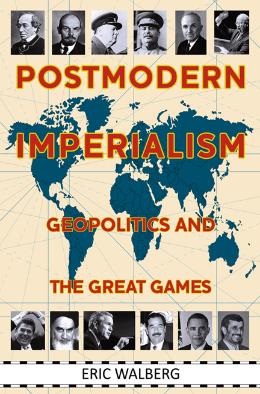
    Q: For a work of geopolitical history, I found the book a real ‘page-turner’.

    A: Thanks. It’s gratifying that this came across. So much of the critique of imperialism is depressing and boring, and puts the reader off. The history is fascinating, if horrifying.

    Q: I was impressed by the great sweep of the argument, and how the details of the history of imperialism as you write about it are integrated so well into it.

    A: Again, thanks. I couldn’t have done it without the internet. I really should have put Wikipedia in the acknowledgments, although this must be treated circumspectly – it allows you to track down hundreds of details in seconds that are essential to making a credible argument. Again, much of the literature is either too detail-heavy or too generalized. In writing both my articles over the past decade, and this (and another book) over the past four years, I developed a style where I try to include as many relevant details as possible without sinking under their weight.

  • Two weeks ago I published a review of Eric Walberg’s invaluable new book Postmodern Imperialism: Geopolitics and the Great Games. I was left with a few questions which Eric was kind enough to address.

    Gilad Atzmon:  Hello Eric; thanks for finding the time to talk. I would like to begin if I may, with a few short questions: firstly, what is self-hatred?

    Eric Walberg: Buddhism is based on the annihilation of the self. Islam – on the total submission of self. It’s at the heart of Christian beliefs too. (I don’t know about Judaism.)  Self-hatred has respectable roots.

  • As oil prices soar and countries think twice about expanding nuclear power, we should be careful about where to point the finger, says Eric Walberg

    Japan’s trauma following the partial meltdown of nuclear reactors in Fukushima has once again brought to the world’s attention the dangers of nuclear power. From the start, it was clear that a broad advocacy of nuclear energy is bad ecology. Splitting the atom (or worse, fusing atoms) unleashes intense heat and radiation and produces poisonous waste that lasts for up to 10,000 years or more.

  • 31/1/11

    Waiting for my flight to Munich in Toronto, a voluble American my age struck up a conversation. Ed is an attorney from Atlanta with 7 kids -- 3 from his first marriage, 2 from his second wife's first marriage, and 2 from their marriage. "A typical American family these days," he said, meaning the mixed marriage rather than the number of kids. He launched unbidden into a scathing critique of the US, saying it was basically a basket case, becoming a totalitarian monster, and that he was looking for a place to move to with his family.

    When I told him I was going to Cairo, he asked if Egypt was a good prospect. Considering it was in the midst of a revolution, I suggested he consider Cyprus as a better option.

  • 2010 was a tough one overall. Public discontent with governments and economic policy brought people out on the streets to protest. US wars, occupation and threat of war in the Middle East and Asia were never far from the headlines. Elections around the world led  in most cases to further tensions. There were few outright winners and many more losers, with most developments a mixed bag.

  • Much is being made of North Korea’s shelling of one of 30 disputed islands, Yeonpyeong, which houses a South Korean military base, well inside what should be a demilitarised zone between the two Koreas resulting in the deaths of two South Korean marines and two civilians. The borders were unilaterally drawn by the UN at the end of the 1950-53 war and the countries are still officially in a state of war. Rumours are that the incident is connected to the possible transition of power from North Korean leader Kim Jong Il to his son Kim Jong Un, or to North Korea’s recent announcement that it is proceeding with its nuclear programme.


    The skirmish began Tuesday when North Korea warned the South to halt military drills at the base, after which Seoul began firing artillery directly into disputed waters within sight of the North Korean shore. The North retaliated by shelling the Yeonpyeong military installations. Seoul responded by unleashing its own barrage of howitzers and scrambling fighter jets over the North, killing far more North Koreans though the actual number is not yet know.

    The words of condemnation -- of the North -- from UN Secretary-General Ban Ki-moon and US President Barack Obama for the “provocation” flowed, as expected. Obama used the occasion to reaffirmed plans to stage joint military exercises later this week in the Yellow Sea, the latest in its own provocations of both North Korea and China this year, following the sinking of a South Korean warship in an earlier joint US-South Korean military “exercise”. Accusations that North Korea torpedoed the Cheonan, killing 46 sailors, were undermined by evidence pointing to the US itself. Pyongyang denied responsibility.

    400 of the 1,700 residents of Yeonpyeong were evacuated. Instead of demilitarising the disputed islands and agreeing to mediation, the South Korean government announced it would strengthen its military forces there and halt aid to the North, while the North warned of more military strikes if the South encroaches on the maritime border by "even 0.001 millimetre."

    That the provocation is from the South Korea side, with its pro-US President Lee Myung-bak, who has made his anti-communist sentiments clear in the past, is confirmed by the fact that the incident failed to scare off investors, with South Korea's stock market experiencing only a momentary ripple.

  • With the rise of Hitler, the Peace Prize committee finally mustered up the courage to take on Nazism, and awarded the 1935 prize to Carl von Ossietzky, a German journalist and pacifist who had spent several years in Papenburg-Esterwegen, a Nazi concentration camp, convicted of high treason and espionage in 1931 after publishing details of Germany's violation of the Treaty of Versailles by rebuilding an air force and training pilots in the Soviet Union. (Ironically, the verdict was upheld by the Federal Court of Justice in 1992.) At the time it was a highly controversial decision, with two jury members resigning, fearing a political fallout with the Nazis.

  • Everyone knows that Alfred Nobel created his eponymous Peace Prize partly to assuage his guilt for unleashing dynamite on an already saber-rattling world. Fewer know that he wrote at the time that if the world still needed the prize 30 years later, we would "inevitably lapse into barbarism".

  • October 2003 -- The America I once knew seems like a distant memory, says one journalist after another these days. But how about this: "Times such as ours have always bred defeatism and despair." Re-reading Einstein's writings on peace, it is clear that America has been through an equally insane fit in the past - such as the madness following World War II.
  • Garment worker, peace activist, mother. Born 1906, sister of composer Leonid Tsukert, wife of poet and peace activist Harold Bates.

    Like a rose bush, Sonja bloomed many times, sending her roots into whatever soil there was, finding nourishment where others found only dirt, and producing beauty and joy where others found only darkness and misery. She was the 4th of 9 children born to a stationmaster on the Imperial Russian railway in eastern Poland.

  • “For centuries, Europeans dominated the African continent. The white man arrogated to himself the right to rule and to be obeyed by the non-white; his mission, he claimed, was to "civilize" Africa. Under this cloak, the Europeans robbed the continent of vast riches and inflicted unimaginable suffering on the African people.”

    --- I Speak of Freedom: A Statement of African Ideology (1961)


    (Spring 2008) -- The incessant stream of bad news — make that “flood” — from “the dark continent” gives the impression that Africa somehow missed out on the wonders of capitalist development which the West luckily reaped through some quirk of fate. No longer is it acceptable to attribute this discrepancy to skin colour, though that underlying prejudice still survives, seemingly corroborated by World Bank — even holier-than-thou United Nations — statistics.

    So the words and works of Kwame Nkrumah, which inspired a generation, are well worth a second glance. In fact, the greatest African of the millennium, according to the 2000 BBC World Service listeners’ poll, is not Nelson Mandela or even Patrice Lumumba, but Kwame Nkrumah, the man who inspired the movement for African independence, but who has dropped out of Western discourse, for very good reasons.

  • The gloves are off in the battle to shape our "new world order", observes Eric Walberg

    19/2/9 -- The American Recovery and Reinvestment Bill passed this week will define Barack Obama's presidency. But it is really just the younger sibling to the Troubled Assets Relief Programme. To separate the now trillions being handed out to the banksters from the $800 billion being handed out to the lottery winners is to be ingenuous. The elder sister's patrons are already blackmailing mama Obama, wailing for more trillions or they will plunge the economy into even greater financial crisis. "You ain't seen nothing yet," they hissed to Treasury Secretary Geithner, who, according to economist Michael Hudson, quickly "pledged government financing for as much as $2 trillion... to spur new lending and address banks' toxic assets, seeking to end the credit crunch hobbling the economy."

  • In the second of a two-part series, Eric Walberg looks at the repercussions of the Soviet occupation of Afghanistan

    29/5/8 -- While the current occupations of Afghanistan and Iraq look to be part of an ambitious plan of American domination of the Muslim world, both are proving to be a much greater problem than their shadowy planners supposed. And whatever conspiracy jigsaw puzzle Afghanistan forms a key piece in, it is certainly not one made in Russia, despite current attempts by the United States to paint Russia, formerly enemy number one, as enemy number two, after the current enemy du jour -- Islam.

  • The US is not only repeating all the Soviets' mistakes in Afghanistan, it is showing remarkable creativity in the horrors department, says Eric Walberg in the first of a two-part series
     
    22/5/8 -- Twenty years ago this week (22 May 2008) the Soviet Union began its withdrawal from Afghanistan, eight and a half years after it was invited by the desperate People's Democratic Party of Afghanistan (PDPA), which had degenerated into intra-party squabbling and was beset by Islamic rebels massively financed by the United States. The straw that broke the Soviets' back was when the US began providing Stinger missiles to Osama bin Laden and his friends.
  • Is there more than meets the eye in the sudden flurry of talk about a world food crisis, asks Eric Walberg

    15/5/8 -- Food protests and riots swept more than 20 countries in early 2008, including Egypt. On 2 April, World Bank President Robert Zoellick told a meeting in Washington that there are 33 countries where price hikes could cause widespread social unrest. The UN World Food Programme called the crisis the silent tsunami, with wheat prices almost doubling in the past year alone,

  • As demonstrators march on the White House with a million signatures on a petition to impeach Bush and Cheney, doubts persist about the event that made them "wartime leaders", says Eric Walberg

    6/9/7 -- Theories about what really happened on 11 September, 2001 continue to inspire books and documentaries and convince otherwise sane, respectable public figures, not to mention the teeming masses. Journalist Robert Fisk recently joined the fray, intrigued by the scientific improbably of the buildings collapsing in such a seemingly controlled way and charges by engineering professors who call the final report "fraudulent or deceptive". As a Middle East expert, he also finds the letter allegedly written by Mohamed Atta, the Egyptian hijacker- murderer "weird", surely a forgery.

  • While UN peacekeeping has done little to calm the world's troubled waters, the UN's other mandate -- development -- has had some success despite its many problems, argues Eric Walberg

    30/8/7 -- The debate over how to achieve peace revolves around two poles: world peacekeeping and disarmament vs economic and social development. The latter argument goes: busy literate hands and full stomachs obviate the need for war, just as the improvement of women's status leads to reduced family size.

  • With its largest peacekeeping mission planned in Sudan, Eric Walberg considers the UN's track record in the first of two articles
     

    16/8/7 -- Founded amidst the rubble of World War II -- well, actually in untouched San Francisco, with delegates spirited in by United States military planes, and nursed and spied on by a US determined to make the most of its new unrivalled world hegemony -- the United Nation started out with much more potential than its stillborn predecessor, the League of Nations, precisely because the US was committed. Even the Republicans were onboard, and all the major powers were present and willing. However, this US blessing was a two-edged sword and the UN's history is one of ups and downs with few political highpoints.