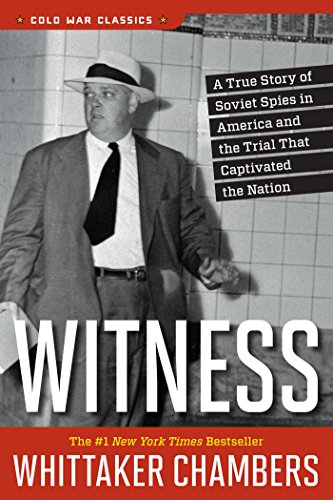
 Though #1 on the New York Times Bestseller list for 13 weeks in 1952, beloved of William Buckley and Ronald Reagan ("As long as humanity speaks of virtue and dreams of freedom, the life and writings of Whittaker Chambers will ennoble and inspire."), despite being hailed as "one of the dozen or so indispensable books of the century" (George Will), Witness quickly disappeared from our collective consciousness. We remember its most famous victim, Alger Hiss, as a nice guy who was mercilessly hounded, the prelude to the McCarthy purges of the 1950s, a gruesome stain on US history.
Chambers was a talented writer, penning popular short stories in the New Masses in 1931, a full time editor and journalist at Time. His autobiography is full of details of both sides of the so-called treachery of the times, and Chambers’ own ruminations about love and death and the whole damn thing. It swings from over-the-top self-righteousness to self-abnegation, maniacal zeal as a communist, then as a spy, then as self-proclaimed Mr Right, and woe to anyone standing in the way of his mission to Save the World from Communism.
Like his closeted father, his uncle and brother, all of whom committed suicide, he was possessed by a demon, which drove him to an early grave, working 36-hour days at Time in the 1940s, first doing book reviews, then editing the foreign news page (till he had his second heart attack), then back to books. His fellow journalists resented his new-found conservative attacks on their liberal New Dealer mindset, seeing them all as commie dupes. He immortalized himself destroying the careers of ‘good guys’, Alger Hiss and Harry Dexter White among many others, for their idealistic sins. He became a born-again Quaker, though, like fellow Quaker Richard Nixon, he still believed in ‘just wars’ against commies.
Victims
His worldview was apocalyptic, first through pink lenses, then puritan. Evil is the central problem of human life. The two opposing worldviews: man as flawed/ sinful (Christianity) vs man as good/ perfectable (enlightenment, liberalism -> communism).
 Leading the march were #FridaysforFuture, S27 Coalition Demands and #Climatestrike
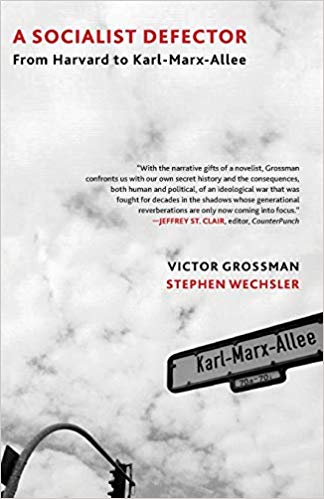 I finished Victor Grossman/ Stephen Wechsler’s*
 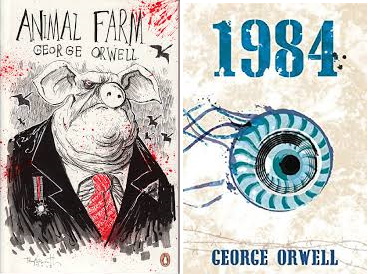 How do you explain the fact that the John Birch Society used 1984 as its main office telephone number in the 1960s? Or that both
 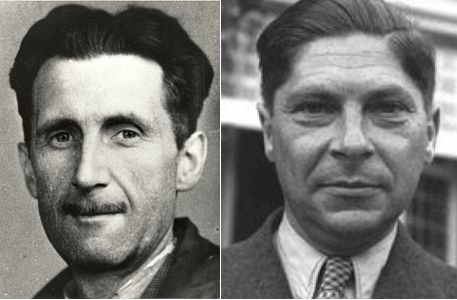 The two most celebrated leftist literary figures of the 1930s--40s, George Orwell (1903--1950) and Arthur Koestler (1905--1983), lived through the 20th century's revolutionary times as documentarists. They were on the front lines as journalists in the Spanish civil war, came close to death there and in WWII, and then wrote their explosive novels dissecting the communist experience from the inside.